
With a loan book of $268 billion, India's retail banking is now ahead of Russia, Malaysia and Mexico but behind China, Brazil and Thailand

After years of losing money on two of the group's biggest bets - global steel business and domestic passenger cars - there are strong signs of a revival in both businesses.

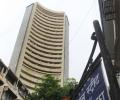
Wiping off nearly Rs 4 lakh crore of investors' wealth during the day, benchmark Sensex crashed on Friday.

This analysis is based on the quarterly earnings for 724 companies.

Build up inflation rate in the financial year so far was 2 per cent compared to a build up rate of 4.56 per cent in the corresponding period of the previous year. Inflation in food articles as a group rose to 11.08 per cent during the month as against 9.80 per cent in the previous month, mainly driven by exorbitantly high onion prices, the rates of which spiked by over 172 per cent from a year-ago. The annual rate of inflation, based on monthly wholesale price index was at 0.16 per cent in October.

Total income of Wipro was almost flat at Rs 15,571.4 crore at the end of the first quarter of 2020-21 compared to Rs 15,566.6 crore in the corresponding quarter of the fiscal year 2019-20.

These firms reported a combined operating profit of Rs 26,077 crore (Rs 260.77 billion).
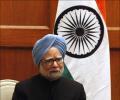
Experts say it will now be tough for the Modi government to catch up with the UPA's economic record owing to the shock induced by the currency demonetisation.

Risk-averse investors can hold up to 10 per cent of their portfolio in gold, while aggressive ones can keep five per cent.

Its rich valuation with a PE of 62 times raises downside risk for investors

Investors turn their attention to export-driven sectors.

Analysts mostly prefer domestic plays beside select films with foreign exposure.

A full-blown recovery remained elusive for India Inc in the July-September quarter, even as it overcame the challenge of achieving profitable growth.
A financial turnaround in Tata Steel and Tata Motors has come as a shot in the arm for Chandra.

While such buying could indicate confidence in the business, investors should do a comprehensive evaluation before getting into the stock.
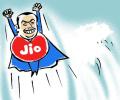
The incumbents Bharti Airtel and Vodafone Idea recorded adjusted gross revenue of Rs 10,701.5 crore and Rs 9,808.92 crore, respectively, during the quarter.

Declining vegetable prices brought down the retail inflation to a 15-month low of 4.59 per cent in December and within the comfort zone of the Reserve Bank, government data showed on Tuesday. It is for the first time during the current fiscal that the Consumer Price Index (CPI) based inflation print is below 6 per cent or in the RBI's target range of 2 to 6 per cent. The central bank factors in the CPI-based inflation while arriving at its monetary policy. The inflation in December 2020 came down from 6.93 per cent in November, mainly on account of 10.41 per cent decline in vegetable prices over the year-ago period.

BSE's, NSE's overnight liquid fund facility can help stock investors maximise returns

Mid- and small-cap companies seem to have done better than top-tier companies
An action on the rate front is unlikely to figure in Rajan's plan for the moment.

The regulator is unhappy with the exchange in the market crash case that occurred in 2012.

Most markets have seen significant erosion in investors' wealth this year

Recovery seen in Q4, companies continue to focus on enhancing cash flow

Most NBFCs will have to slow down their loan growth. Some of the most leveraged will have to sell a part of their assets (or loan book) to banks to raise incremental capital. Others may have to knock on the door of their deep-pocketed parents.

Crude oil prices have more than doubled, pushing up India's import bill and raising fears of a higher current account and fiscal deficit. This will impact corporate earnings.
.jpg)
Net profit grew 25.4% in Q4 but revenue growth, lower at 8.5%, suggests lack of volume expansion.
While growth metrics for Infosys was skewed to a single vertical and it is struggling to get a handle on costs, TCS has been able to manage growth and keep cost inflation under control.

The fall was led by L&T, IndusInd Bank, PowerGrid, NTPC, TCS, ICICI Bank, Axis Bank, Hero MotoCorp, Bharti Airtel and SBI, declining up to 2.64 per cent.

The markets gained nearly 7 per cent in the 4 trading sessions of March.


12 out of 21 public sector banks reported declines in their loan books in the last financial year against seven such banks in 2015-16 and none in 2013-14.

During the month, inflation in vegetables shot up to 35.99 per cent, as against 26.10 per cent in October. Likewise, the prices of cereals and eggs grew at a faster pace of 3.71 per cent.

According to JP Morgan, it seems that Jio is willing to go for the jugular in chasing market share if this hurts some of its standing rivals like Vodafone and Idea to a point from where they find it difficult to fight back.

Rising oil prices and diminishing cash pile to limit capacity in 2018-19

HUL, ITC, Nestle, Colgate, Dabur, Britannia, Asian Paints, P&G are trading at nearly 48 times. The previous record high was 53 times at the end of March 1994.

NTPC to be the worst hit, stock slides to five-year low on announcement.

The fall came on the back of a massive selloff in NBFCs, led by DHFL which skidded over 50 per cent on fears of a liquidity crisis.

FIIs accumulated India's top-listed companies at an average valuation of around 16 times.

Analysts say strengthening bank's capital will boost earnings, bank needs chief with long stint to run show

Sales expansion also down 4.4%
 © 2026 Rediff.com - Advertise with us - Disclaimer - Privacy Policy - Sitemap - Feedback - About us - Terms of use - Grievances